Particle Board Melbourne
Build Smarter with Superior Particle Boards in Melbourne
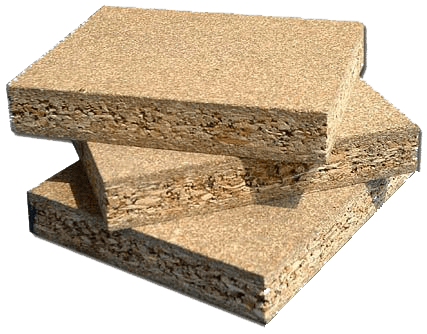
Particle Board is known as a wood panel that is exceedingly dense, affordably priced and versatile due to its core being filled with large particles and exquisite particles found within the sanded exteriors. As a result, it is also known as chipboard.
Particle Board is identified for its bonded strength and a more uniform material. As a result, it has a wide variety of uses, i.e shelving for sheds, garages, and applications where it is covered, but not to be used in areas that attract moisture, it also comes overlaid with melamine.
If you are searching for this versatile material within our quality range, we offer Standard Particle Board, Highly Moisture Resistant (HMR) and General Purpose Particle Board Flooring.
Highly Moisture Resistant (HMR) is the same as the standard version except that it is Moisture Resistant, (not waterproof). Applications for HMR are areas of high moisture, like kitchens, bathrooms and laundries. All of our board materials including HMR, are made from Pine, logged from managed and sustainable Pine forests, in Australia. The emission level of both is E0.
Contact us today as your preferred building materials supplier so we can assist with the materials you may need.
What is a Particle Board?
Particleboard is a type of manufactured wood made from compressed wood particles.
Chipping: Before chipping, the logs may have to be debarked, if not already done so in the forests, as this will avoid blunting the chipper knives. Once the bark is removed, the wood is cut to a predetermined length and fed into a chipper.
Planer shavings and similar waste are milled to the required particle size. Surface and core chips are often prepared in different ways and held in separate storage.
Drying: Wood chips are passed through a dryer to reduce their moisture content to about 2.5 percent to facilitate gluing and hot pressing. Core and surface chips may be dried to slightly different moisture contents.
An alternative to rotary dryers is flash drying, which requires somewhat lower drying temperatures.
Gluing: The dry chips are blended with a synthetic resin and any other appropriate additives such as hardener or wax emulsion. Proportioning of glue and chips must be very exact and may vary as surface chips often have higher glue contents.
At this stage, any special requirements such as fungal or flame-retardant treatments can be added. The type of glue used can also determine the properties, such as the moisture resistance.
Mat forming: A mattress of wood chips coated with adhesive is formed by dropping them on to caul plates or belts. Depending on the type of mat-forming machinery, this will produce either consistent graded density or layered mats.
Pressing: Pre-compressing is commonly carried out and then the mat is further compressed to a predetermined thickness (usually about 5mm) in a high-pressure and temperature press, which may be multi-daylight, single daylight or continuous.
Trimming and sanding: After cooling, each panel is trimmed and then sanded to a desired thickness and to produce a smoother finish.
Discover Our Premium Particle Board Sizes & Options
18mm – 1800×600
- 12mm, 16mm, 18mm, 25mm, 33mm – 2400×1200
- 16mm – 3600×1200
- 18mm – 3600×600, 3600×1200, 3600×1800
- 33mm – 3600×600, 3600×900, 3600×1200
Celebrating 100 years
From humble beginnings in 1924. Cabinet Timbers has grown to Victoria’s leading supplier of wood panels. We know the importance of thinking long-term. At Cabinet Timbers, we believe in sustainability – that’s why everything we sell is sourced from sustainably managed forests. After all, we’ve only got one planet, and it’s our responsibility to do what we can to protect it and reduce the impact of the Australian building and manufacturing industry.
Shop For Melbourne's Particle Board at Your Fingertips
At Cabinet Timbers, we make purchasing premium-quality particle boards effortless and convenient. Whether you’re a professional tradesperson or a DIY enthusiast, you can find exactly what you need with just a few clicks.
Experience the ultimate convenience of online particle board shopping with Cabinet Timbers—your trusted partner in quality and service. Contact us for expert advice or request a free quote to bring your project to life.
Particle Board FAQs
The thickness of a standard particle board depends on a variety of factors usually on the manufacturer and its intended use. The most common thickness measured is 12mm – 33mm. Furthermore, it should be noted that the strength and durability of a particle board correlate with the thickness of the panel material. So, it’s important to select a particle board based on its thickness and specific usability.
A particle board is an engineered wood product bonded together from glued wood particles. Furthermore, it is smooth and has a consistent surface with different grades based on specific use. It is considered a relatively inexpensive wood material with great versatility for a variety of design applications such as furniture, wall panels, flooring and cabinetry.
Whilst particle board is made up of glued wood particles and MDF boards is made from bonded wood fibres. MDF is considered denser, robust and expensive in comparison but the particle board is both smooth and has a consistent finish for an inexpensive material.
It is not fire resistant and can be highly flammable.
A wooden particle board can vary on the basis of the quality, strength and grade of the board. Higher-grade boards such as hardboards are both sturdy and denser, whilst lower-grade boards are known to be weak in comparison. Furthermore, the strength of a board can be measured against external factors such as temperature, moisture and the specific adhesive bonding of the wood particles together.
Trusted by builders and renovators across Melbourne
Our Trusted Australian Manufacturers